How it works
From your address to a signed report
No site meeting to arrange, no proposal to decode. Send the address, accept the quote, and a field engineer drills the block. Here is each step, and what happens on the day.
The five steps
Send us the address
Use the form or call. Tell us what you are building and, if you have one, the wording of the council condition or your certifier's request. Standard sites get the fixed fee (from $690 + GST) straight away; anything else gets a scoped quote.
Accept the quote and pick a day
Reply to the quote email to accept it. We agree a day for the site visit and tell you what we need: access for the rig, roughly where the building is going, and anything underground we should know about. In Sydney, this is the moment the 5-business-day clock starts.
We drill, log and sample
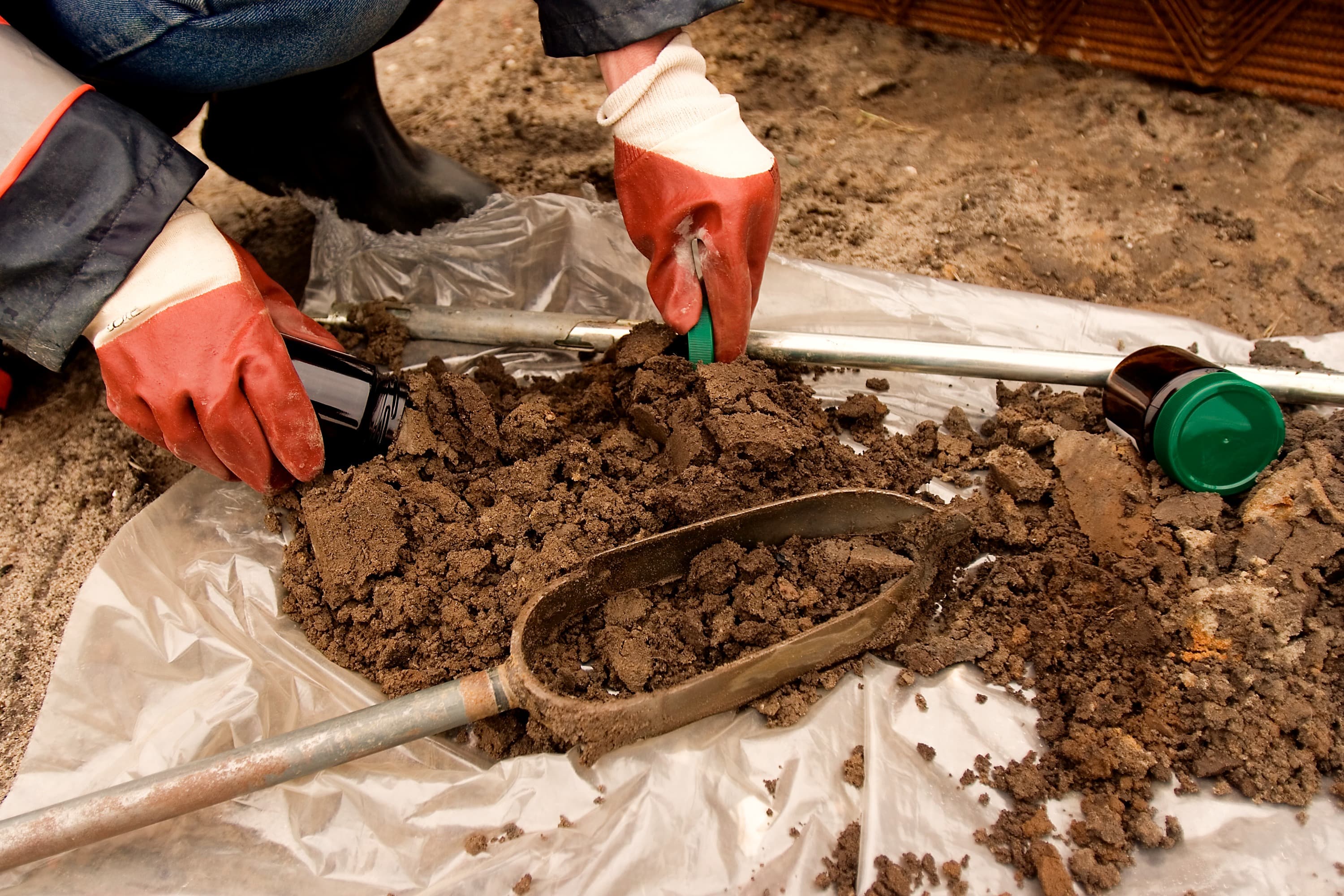
A field engineer arrives with a rig or hand equipment, drills the boreholes, logs the soil as it comes out of the ground, records any groundwater and takes samples for the laboratory where the report needs them. About an hour on site for a standard classification.
The laboratory does its part
Where the classification or the design depends on it, samples are tested for moisture, plasticity and shrink-swell behaviour. Most standard classifications need only a little of this; geotechnical reports need more.
An engineer writes and signs the report
The field engineer drafts the report from the logs and the results. A geotechnical engineer checks it and signs it. It comes to you as a PDF, and to your builder or certifier if you ask.
Sydney site classifications: 5 business days or free
Five business days, or the report is free
A site classification in Sydney is finished within five business days of you accepting the quote, or you don't pay for it. All we ask is that we can get onto the block.
Need it sooner? Three business days or less for $300 + GST.
What the guarantee assumes
- It covers a standard site classification. Geotechnical reports, investigations and retaining-wall work are scoped site by site and get a timeframe with the quote instead.
- The site is in the Sydney metropolitan area — the Sydney Metro zone on the pricing page. Other zones get a timeframe with the quote too.
- The five business days run from when you accept the quote. Business days are Monday to Friday, excluding NSW public holidays.
- We can get onto the site. If access is not available on the day we book, or we are turned away, the clock pauses until we can drill.
- The invoice is paid before the site visit, as it is on every job. Days an invoice is outstanding are not counted.
- The scope is the one you accepted. If the ground turns out to need more holes, deeper holes or extra laboratory testing, we quote that first and the clock restarts when you accept it.
- If we miss it, the report is free: we do not invoice it, and where it has already been paid we refund it.
The full wording is in the service terms.
What happens on the day
We confirm the time
You know the day in advance. You do not need to be there, as long as we can get onto the block.
We find the footprint
Boreholes go where the building is going. A sketch or a site plan helps; a description over the phone is usually enough.
We drill and log
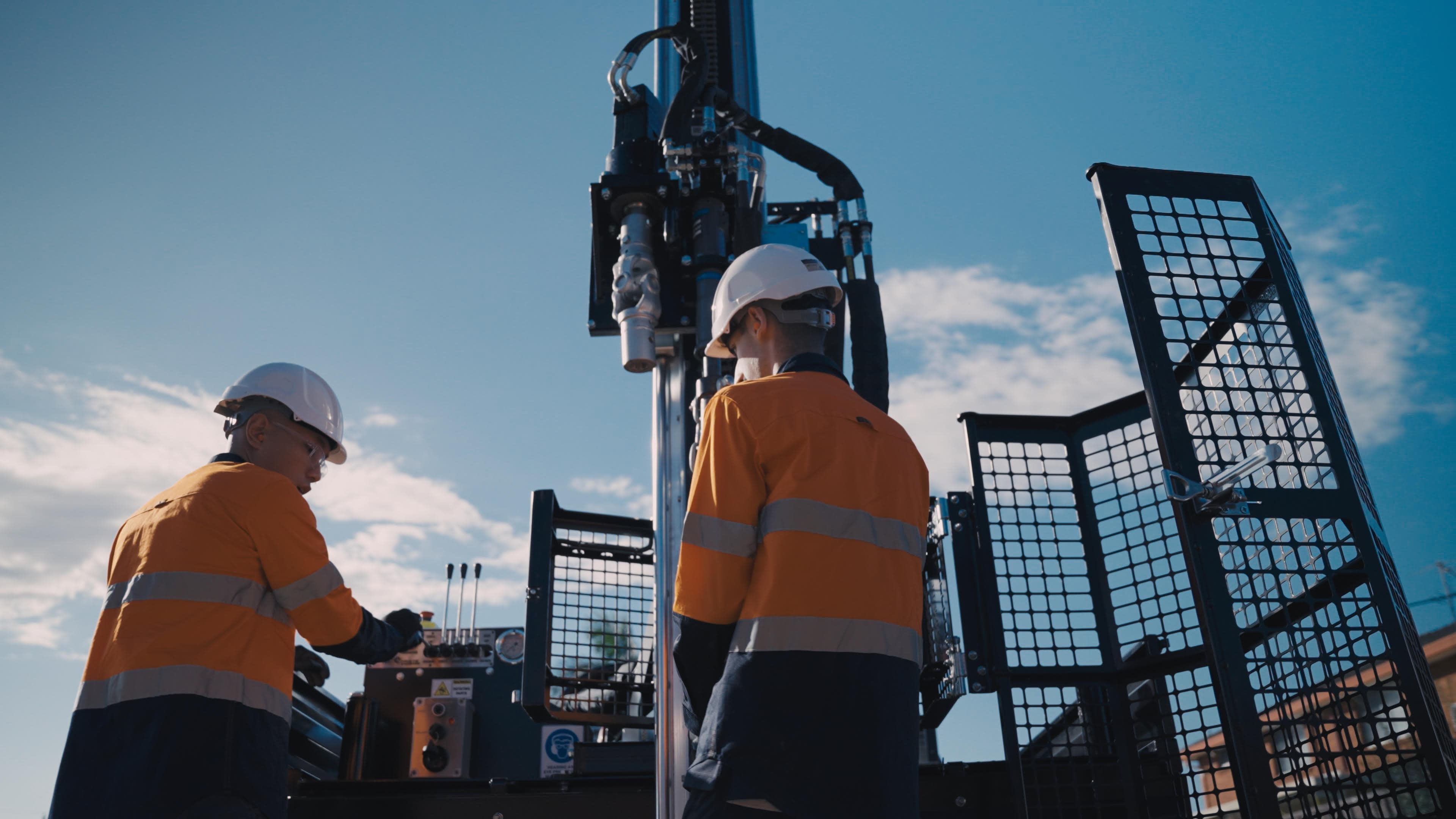
Two boreholes to 2.5 m for a standard classification, deeper for geotechnical reports. The holes are backfilled before we leave.
We tell you what we saw
If something surprising turns up, fill, rock, water, you hear about it on the day, not in the report a fortnight later.
What is in the report
Short, and written to be read: a builder, a certifier and an owner should each be able to find what they need.
- The site and the proposal
- Address, what is being built, who asked for the report and what it is meant to answer.
- What we did
- Borehole locations, depths, equipment, in-situ tests and the laboratory testing carried out.
- What we found
- The soil profile, groundwater, fill, rock and anything else the footing designer needs to know, with the borehole logs attached.
- The classification or recommendations
- The AS 2870 site class with the reasoning, or for a geotechnical report the bearing capacity, founding level and excavation advice.
- Limitations
- Boreholes are discrete points: what the report can and cannot say about the ground between them, and when to call us if the site looks different during excavation.
Who does the work
Ground Check is a geotechnical practice in Sydney built for small jobs. Our own field engineers drill and log your block, our own laboratory does the testing, and a geotechnical engineer checks and signs the report before it goes out. The difference from a larger consultancy is a fixed fee and a form instead of a proposal.
Every report is checked and signed by a geotechnical engineer.
Contact us
- 0433 627 837
- info@groundcheck.com.au
- Sydney and regional NSW
Common questions
- What is a site classification, and do I need one?
- A site classification is the soil report that tells your builder, slab designer and certifier how reactive the ground is: how much it is likely to swell and shrink with moisture, and what that means for footings. It is classified under Australian Standard AS 2870 (Residential slabs and footings) as A, S, M, H1, H2, E or P. Nearly every new house, extension, granny flat and garage on a slab or strip footings needs one before the footings can be designed.
- What is the difference between a site classification and a geotechnical report?
- A site classification is for small structures on simple ground: a house, extension, granny flat or garage on a flat or gently sloping block with no basement. It answers one question, the AS 2870 site class, so a standard footing can be chosen, and it is a fixed fee. A geotechnical report is for everything else: steep or sloping sites, basements and deep excavations, retaining walls, pools near a boundary, fill, rock, groundwater or complex geology, duplexes and townhouses, and any council DA or CC condition that asks for a geotechnical report by name. It describes the ground profile, gives bearing capacity and founding recommendations, and comments on excavation, retaining and drainage, so it is a custom quote, not the fixed fee. Not sure which you have been asked for? Ask your architect, designer, structural engineer or certifier, or send us the wording and we will tell you.
- How long does it take?
- In Sydney, five business days from the moment you accept the quote to the signed report in your inbox, or the report is free. That is every report we do, not just a site classification. Need it sooner? Three business days or less costs $300 + GST on a site classification, or from $500 + GST on a geotechnical report. The promise assumes we can get onto the block, that the invoice is paid before the site visit as it is on every job, and that the scope is the one you accepted; if the ground turns out to need more than that, we quote it first. Outside Sydney we do not put a guarantee on it: the quote gives you the timeframe for your site before you accept.
- What happens on the day?
- A field engineer visits the site with a drilling rig or hand equipment, drills the boreholes, logs the soil profile as it comes out of the ground and takes samples for the laboratory where the classification depends on them. A standard site classification takes around an hour on site. You do not need to be there, as long as we can get onto the block and we know where the house is going.
- How deep do you drill?
- For a standard site classification, two boreholes to 2.5 metres, which is what AS 2870 expects for a residential footing. Geotechnical reports for DAs, deeper excavations or retaining walls go deeper, and we say how deep, and why, in the quote.
- Will my builder and certifier accept the report?
- Our reports are written to AS 2870 and AS 1726, the standards that slab designers, structural engineers and certifiers work to, and each one is checked and signed by a geotechnical engineer. The fixed fee and the online quote are what make a small job simple; the report itself is done to the same standard as any other.
- What does 'from $690 + GST' cover?
- A standard residential site classification: the site visit, two boreholes to 2.5 metres, laboratory testing where the classification needs it, and the signed AS 2870 report. $690 is the Sydney Metro fee; other zones are fixed too, $790 to $1,290 + GST. Enter your postcode on the instant quote page to see yours and accept it online. Sites that need more holes, deeper holes, extra laboratory testing or a full geotechnical report are quoted from the address before we book anything.
- What if the site is Class P, or there is fill or rock?
- Don't panic. Class P is common in Sydney and it is not a failed test: it means the footing is designed for the specific ground (usually fill, soft soil, trees near the footings or a slope) rather than picked off a table. Most of the time it is accommodated comfortably with a slightly different footing, and the report says exactly what the designer needs to allow for. Only occasionally does it call for a fuller geotechnical investigation, and we tell you if it does.
- How do I get a quote?
- Send the site address and what you are building through the form, or call. For a standard site we quote the fixed fee straight away; for anything else we come back with a scoped price. No obligation, and nothing is booked until you accept.
Need a soil report? Start here.
Site classification (small structures, simple ground): check your postcode and accept the fixed fee online. Geotechnical report (steep sites, basements, walls, complex ground, council conditions): send the address and we quote it, usually the same day.